 Child Safety
Farm safety for little kids: a fenced play yard, and Kidsafe WA's free checklist
On a farm, the backyard is also a workplace. Kidsafe WA's free farm safety fact sheet, parent's guide and checklist show WA families how to build a safe play yard and fix the biggest hazards: water, vehicles, quad bikes, chemicals and animals.
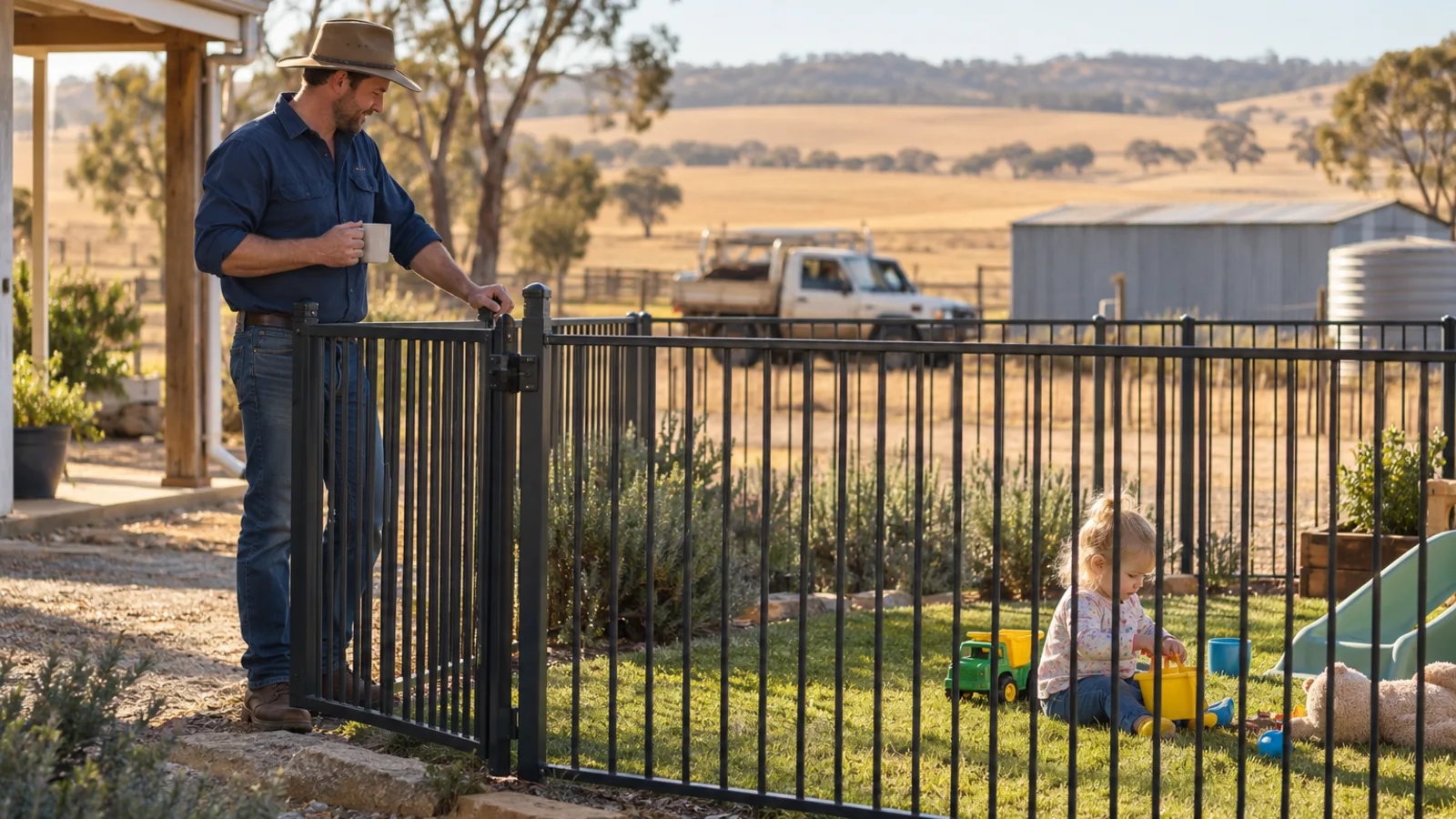
Growing up on a farm is a gift. Room to run, animals, dirt, sky. But the yard your toddler plays in is also somebody's workplace, with a dam, a ute, a quad bike and a shed full of chemicals somewhere close by.
Kidsafe WA has put everything a farming family needs in one place: a short fact sheet, a full parent's guide, and a yes-or-no checklist you can walk around the property with. All free, all made in WA.
Get Kidsafe WA's farm safety resources
What it is
Kidsafe WA's "Let's Make Farms Safer for Kids!" page collects its farm resources:
- Farm Safety fact sheet. Two pages, updated in 2026. The quick version: play yard, water, quad bikes, machinery, chemicals, animals, first aid.
- A Parent's Guide to Kidsafe Farms. The full booklet: tractors, workshops, grain silos, hay stacks, firearms, noise, visiting children, and what to do in an emergency.
- Farm safety checklist. At the back of the guide. Every question is a yes or a no, so you can see in one walk what's done and what isn't.
- A short animation and a recorded webinar on keeping kids safe on farms.
WorkSafe WA says the same things from the other side of the fence: a farm is a workplace, and children on it need the adults to manage the risks.
Who it's for
- Families living on a farm or a rural block, anywhere in WA.
- Grandparents whose grandkids come for the holidays.
- Anyone hosting visitors, farm stays or school groups. WorkSafe WA suggests every visitor gets a short farm safety induction.
The one thing to do first: a safe play yard
You can't take the dam or the machinery off a farm. So Kidsafe's answer for little ones is to take the child out of the workplace instead: a small fenced yard by the house where they can play while you work.
Kidsafe WA's guidance for that yard:
- Close to the house and easy to see from inside.
- Fenced 1.2 to 1.5 metres high, with little or no gap at the bottom.
- Vertical bars no more than 100mm apart, and no footholds to climb. Pool fencing works well.
- A self-closing, self-latching gate, never propped open.
- Away from the driveway, and free of water, chemicals and vehicles.
- Nothing movable inside that a child could stack and climb.
- Soft ground and good things to do: grass, sand, a sandpit, a cubby, non-toxic plants.
A fence on its own isn't the whole answer. Kidsafe pairs it with an adult watching. If there's more than one adult about, decide out loud who is on watch.
The big hazards, in a few lines each
Water. Dams, tanks, troughs, creeks and pools. Kidsafe WA reminds us a child can drown in a few centimetres of water. Fence the pool. Put lids or mesh on wells and troughs. Take ladders off tanks or move them out of reach. Never ask an older child to watch a younger one near water.
Vehicles and machinery. Small children are hard to see from a tractor or a ute. Hold them close when anything is moving. Lock vehicles and take the keys out. No children in the back of a ute, trailer or tractor.
Quad bikes. Kidsafe WA advises that children under 16 don't drive or ride as passengers on a quad bike or motorbike. WorkSafe WA says children should never ride on or drive adult quad bikes.
Chemicals. Lock them in a shed away from the house and the play yard, in their original labelled containers. Keep the Poisons Information Centre number by the phone: 13 11 26, 24 hours. Our post on the Poisons Information Centre explains what happens when you call.
Animals. Supervise children around all animals, keep pens and stockyards out of reach of little ones, and keep bulls and stallions in secure paddocks well away from the house.
First aid. Help can be a long way off in the country. Keep the first aid kit stocked and your training current. A course like Tiny Tots First Aid or the free Heart Beat Club online is a good start.
What it costs
Nothing. The fact sheet, guide and checklist are free to download. Kidsafe WA also runs free Keeping Kids Safe workshops for parent groups and visits regional towns.
How to use it, step by step
- Open Kidsafe WA's farm safety page with the button below.
- Download the fact sheet and read it with your partner over a cuppa. Ten minutes.
- Open A Parent's Guide to Kidsafe Farms and go to the checklist at the back.
- Walk the farm with the checklist. House yard, sheds, dam, tanks, workshop. Tick yes or no.
- Pick the first fix. If you have under-fives and no fenced play yard, that's usually it.
- Set the family rules: work areas are out of bounds without an adult, children tell an adult where they're going, never play on or near a tractor.
- Tell visitors the rules when they arrive, including grandparents and workers.
Get Kidsafe WA's farm safety resources
Sources
- Kidsafe WA: Let's Make Farms Safer for Kids! (fact sheet, parent's guide, checklist, animation, webinar)
- Kidsafe WA: Farm Safety fact sheet (play area 1.2 to 1.5 metres, water, quad bikes under 16, machinery, chemicals, animals, first aid; updated 2026)
- Kidsafe WA: A Parent's Guide to Kidsafe Farms, third edition 2019 (safe play areas, bar spacing 100mm, self-closing gate, family rules, water, animals, checklist)
- WorkSafe WA: Child and visitor safety on farms (major risks, visitor induction, fenced play area, utes and quad bikes; updated 11 June 2026)
- Farmsafe Australia: Child Safety on Farms guide (September 2023)