 Child Safety
Hot cars: Kidsafe WA's free fact sheet for a Perth summer with little ones
A parked car can get more than 30 degrees hotter than the air outside, and most of that heat builds in the first five minutes. Kidsafe WA's free Hot Cars fact sheet gives parents the simple habits that keep babies and toddlers safe in the car this summer.
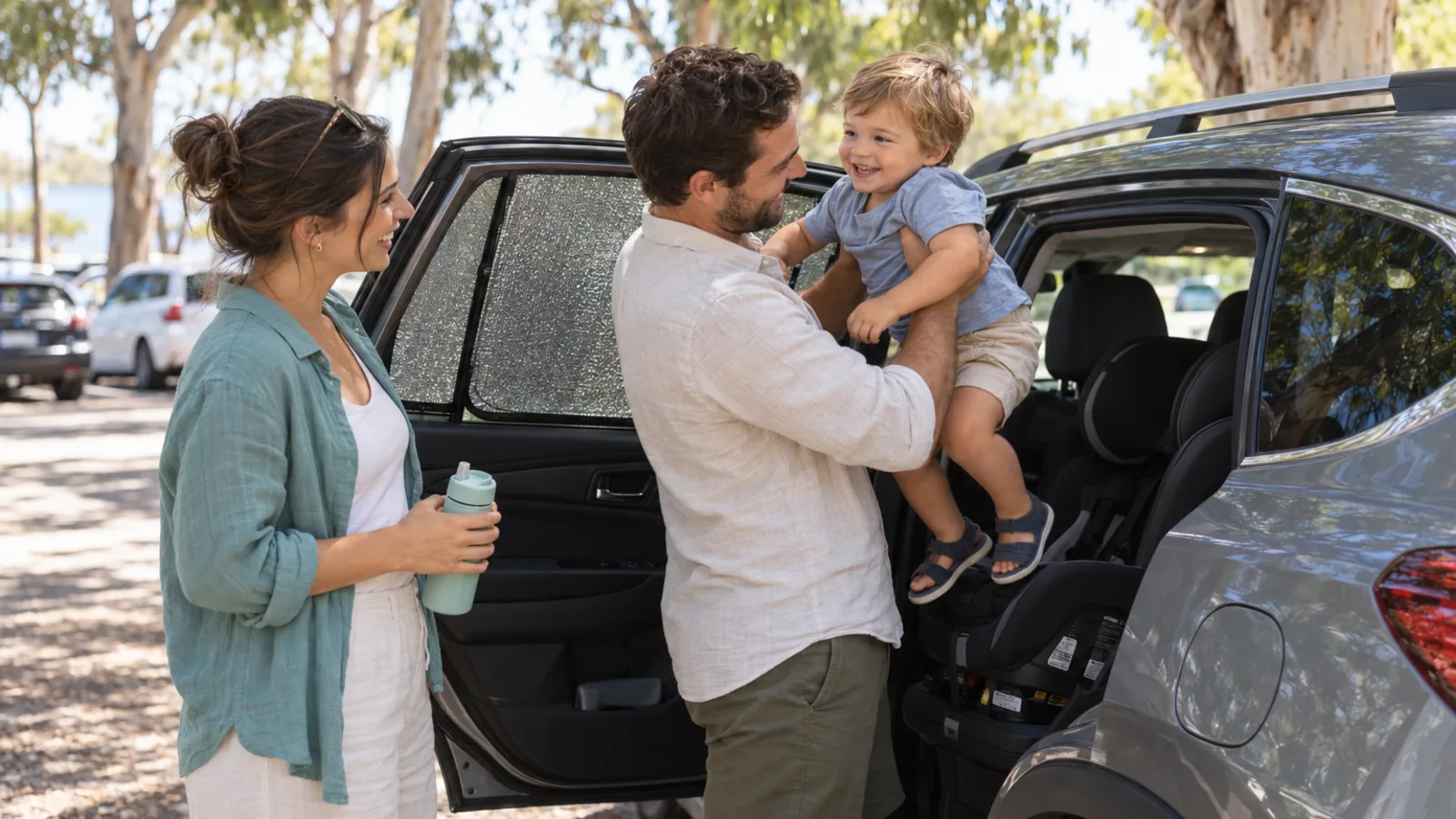
Perth summers are long, and a lot of family life happens in the car: the shops, kindy drop-off, the beach, Nan's place. The car feels like a safe little bubble. Once it's parked in the sun, it's the opposite.
A parked car can get more than 30 degrees hotter than the air outside, even on a cool day. Kidsafe WA says about three-quarters of that rise can happen in the first five minutes. About 5,000 Australian children are rescued from cars every year, and three-quarters of them are under four.
Kidsafe WA has a free two-page Hot Cars fact sheet, updated June 2026. It's short, plain, and worth reading before the first 40-degree day.
Get Kidsafe WA's Hot Cars fact sheet
What it is
A free download from Kidsafe WA, the state's child injury prevention charity. No sign-up. It covers:
- How fast a parked car heats up, and why opening a window barely helps.
- Why babies and toddlers are at more risk than adults.
- Ten habits that lower the risk, from parking to petrol.
Kidsafe WA's Road Safety page has a short Hot Cars Campaign section with the national numbers and four quick tips.
Who it's for
Every family with a baby, toddler or preschooler and a car. Also grandparents, babysitters, and anyone who sometimes drives your children around.
Why a window down doesn't help
This one surprises people. Opening the window a little makes almost no difference. Kidsafe WA cites a 2011 study of parked cars: a window open 2.5 cm brought the temperature down by only about 3 degrees.
So there's no "safe" way to leave a child in a parked car for a few minutes. Not with the window down, not in the shade, not on a mild day.
Why little ones are at more risk
From the fact sheet:
- Children heat up faster than adults and feel the effects much sooner.
- The air goes still. In a parked car the heat and humidity rise and the airflow drops, which can lead to dehydration.
- A hot, upset child struggles. A distressed child may try to wriggle out of their car seat, and that can tangle them in the harness.
The habits that keep them safe
Kidsafe WA's list, in our words:
- Never leave a child alone in the car. Not for a quick errand, not while they sleep.
- Do quick jobs when the kids aren't with you. And for petrol, use pay-at-the-pump if your servo has it.
- Lock the car and keep the keys away from children. Children can climb into a parked car and lock themselves in. Never let them play in the car or with the keys.
- Check the back seat before you walk away. Every time.
- Cool the car before they get in. Run the air con first, and park in the shade when you can.
- Use window shades or visors. But don't put a hood or cover over a rear-facing capsule: it cuts the airflow around your baby's head.
- Check the harness in summer. Light clothes mean the straps can end up loose. Tighten them to fit.
- Drive in the cooler part of the day when you have a choice.
- Bring plenty of water. On long trips, stop often so everyone has a drink.
If you ever see a child alone in a hot car, call 000.
What it costs
Nothing. The fact sheet is a free download.
How to use it, step by step
- Download the Hot Cars fact sheet (button above or below). Two pages.
- Pick your "back seat check". Something you do every time you park, like putting your phone or bag on the back seat so you have to open that door.
- Find a pay-at-pump servo near home and use it when the kids are with you.
- Put a window shade in the car before summer, and check the capsule has no cover over it.
- Re-check the harness the first time your little one wears summer clothes.
- Share it with grandparents and anyone else who drives your children.
Hot cars are one danger a parked car holds. The other is the driveway: our driveway safety post covers the walk-around habit. If you're not sure your car seat is fitted right, see our post on finding a car seat fitter.
Get Kidsafe WA's Hot Cars fact sheet
Sources
- Kidsafe WA: Hot Cars fact sheet, June 2026 (over 30 degrees hotter than outside; window open 2.5 cm lowers it about 3 degrees; children more sensitive to heat; humidity, airflow, dehydration; distress and harness risk; reducing the risks)
- Kidsafe WA: Road Safety, Hot Cars Campaign (about 5,000 Australian children rescued from cars a year, three-quarters under four; 75% of the rise in the first five minutes; recommendations)
- Dadour, I. R., Almanjahie, I., Fowkes, N. D., Keady, G., & Vijayan, K. (2011). Temperature variations in a parked vehicle. Forensic Science International, 207(1-3), 205-211