 Child Safety
Holding hands near the road: Kidsafe WA's free guide to keeping little walkers safe
Young children can't judge speed, can't tell where a sound is coming from, and are too small for drivers to see. Kidsafe WA's free pedestrian fact sheet gives parents the simple habits that keep them safe on footpaths, at crossings and getting out of the car.
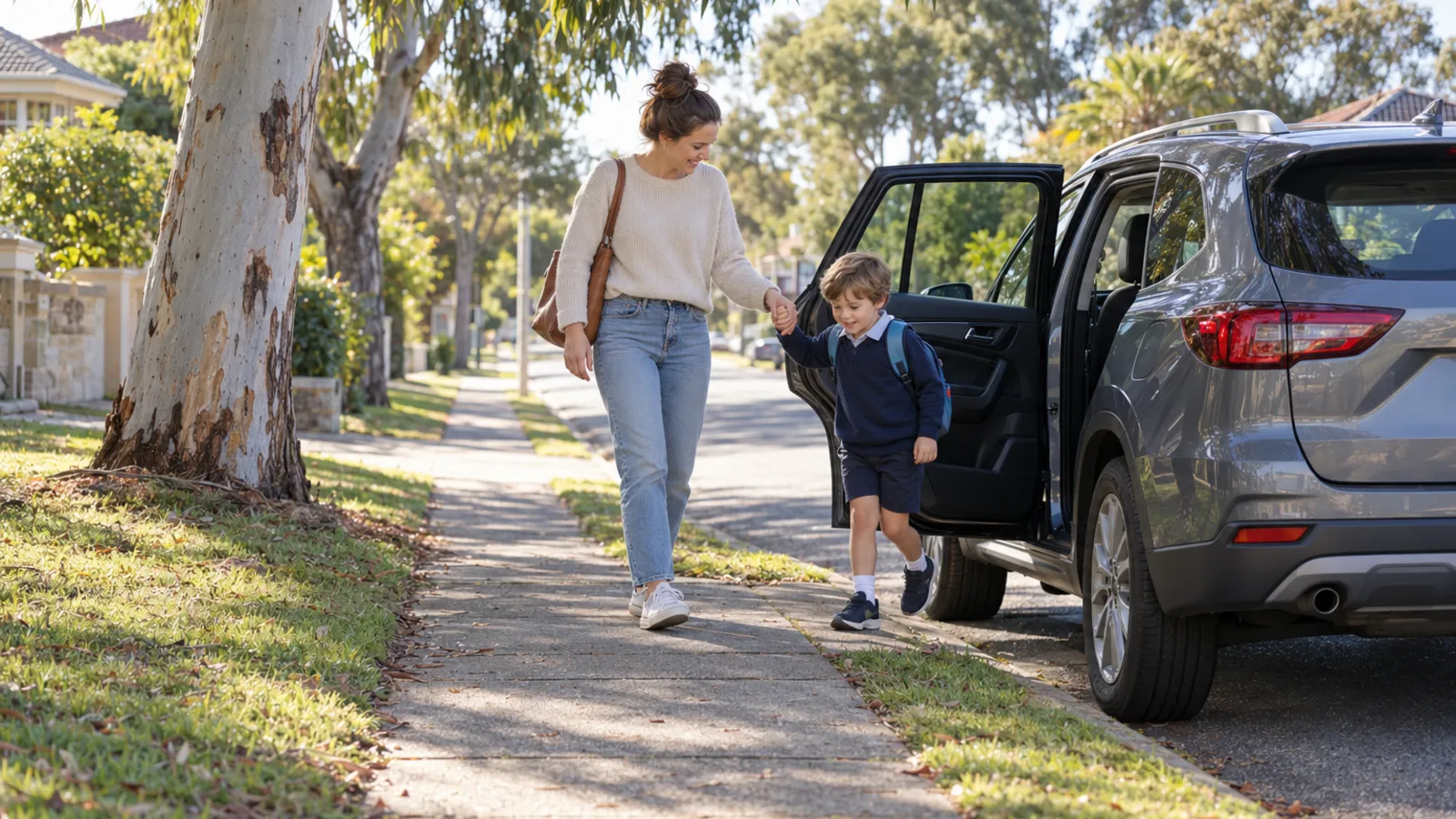
Walking to the park, the shops or kindy is one of the best things a little one does all day. It builds strong legs and a sense of their own neighbourhood. It's also where a lot of road injuries start, because the road was built for grown-ups and a three-year-old is not a small grown-up.
Kidsafe WA has a free one-page Pedestrian Safety fact sheet (updated June 2026) and a longer Parent's Guide to Kidsafe Roads with a page just for children up to five. Both are plain, short and worth five minutes.
Get Kidsafe WA's Pedestrian Safety fact sheet
Why young children are at risk
Kidsafe WA gives three reasons, and every parent will recognise them.
- They're short. A small child is hard for a driver to see, and a parked car hides the traffic from them too.
- Their brains are still growing. Young children struggle to tell where a sound is coming from and how fast something is moving. They copy what they see, and they get distracted.
- They haven't had the practice. A child might see a car and not understand that the driver can't see them, like a car backing out of a driveway.
None of this is a child being naughty. It's how children are built. The job of keeping them safe near the road sits with the adults until they're much older.
What to do with children up to five
From Kidsafe WA's guide for this age:
- Hold their hand near traffic. Every time, and always when crossing.
- Use the safety door. Children get in and out of the car on the kerb side, through the back door behind the passenger seat. Never on the road side.
- Keep play away from cars. Fence the play area off from the driveway and street if you can. If you can't, help them pick a safe spot and watch closely.
- Walk right around the car before you reverse. Ask everyone who uses your driveway to do the same. Our driveway safety post has the full habit.
- Talk as you cross. "We stop at the kerb. We look this way, then that way. We listen. Now it's clear." They copy what you say and do.
- Ask your kindy or preschool whether they teach road safety and what they do at drop-off.
As they get bigger
The fact sheet adds words and habits you can start early:
- Teach them to use the footpath and to watch for cars crossing driveways.
- Explain "fast", "slow", "near" and "far".
- Teach Stop, Look, Listen and Think before crossing, and explain what each one means.
- Show them the safe places to cross: pedestrian crossings and traffic lights.
- Talk about road signs and what they mean.
- Dress them in clothes that are easy to see.
For school pick-up, the guide has one rule worth remembering now: pick a safe meeting spot, and never call your child across the road to you. Cross over and get them.
Scooters and skates
Scooters, skateboards and skates send more children to the Perth Children's Hospital emergency department with road injuries than anything else, Kidsafe WA says. Most are falls. Its Small-Wheeled Devices fact sheet says:
- Ride on footpaths and shared paths, keep left, and give way to people walking.
- Kidsafe WA recommends keeping them off the road altogether.
- A helmet made to AS/NZS 2063, measured to your child's head, with the chin strap done up. Wrist, elbow and knee guards too.
- Replace a helmet after a hard fall, even if it looks fine.
- Check brakes and the folding lock work before each ride.
What it costs
Nothing. Both fact sheets and the full guide are free downloads.
How to use it, step by step
- Download the Pedestrian Safety fact sheet (button above or below). It's one page. Stick it on the fridge.
- Make the safety door a rule. Next time you park, show your child the kerb-side back door and tell them that's their door.
- Practise on a quiet walk. Stop at each kerb together and say Stop, Look, Listen and Think out loud.
- Point out crossings and lights on the walks you do every week.
- If they scoot, download the Small-Wheeled Devices fact sheet and check their helmet fits.
- For the whole picture, the Parent's Guide to Kidsafe Roads covers driveways, car seats, bikes and walking in one booklet.
Get Kidsafe WA's Pedestrian Safety fact sheet
Sources
- Kidsafe WA: Pedestrian Safety fact sheet, June 2026 (why children are at risk: height, brain development, experience; hold hands; safety door; footpaths and driveways; fast, slow, near, far; Stop, Look, Listen and Think; safe crossings; signs; visible clothing)
- Kidsafe WA: A Parent's Guide to Kidsafe Roads (pedestrian safety up to 5 years and 5 to 9 years; small-wheeled devices)
- Kidsafe WA: Small-Wheeled Devices fact sheet, June 2026 (largest number of road traffic injury presentations to Perth Children's Hospital ED; WA road rules; helmets to AS/NZS 2063; wrist, knee and elbow guards)
- Kidsafe WA: Road Safety resources