 Child Safety
13 11 26: what happens when you call the Poisons Information Centre about your child
The WA Poisons Information Centre answers 13 11 26 around the clock. When to call, what they will ask you, what to do while you dial, and the few minutes of setting up at home that stop most calls happening at all.
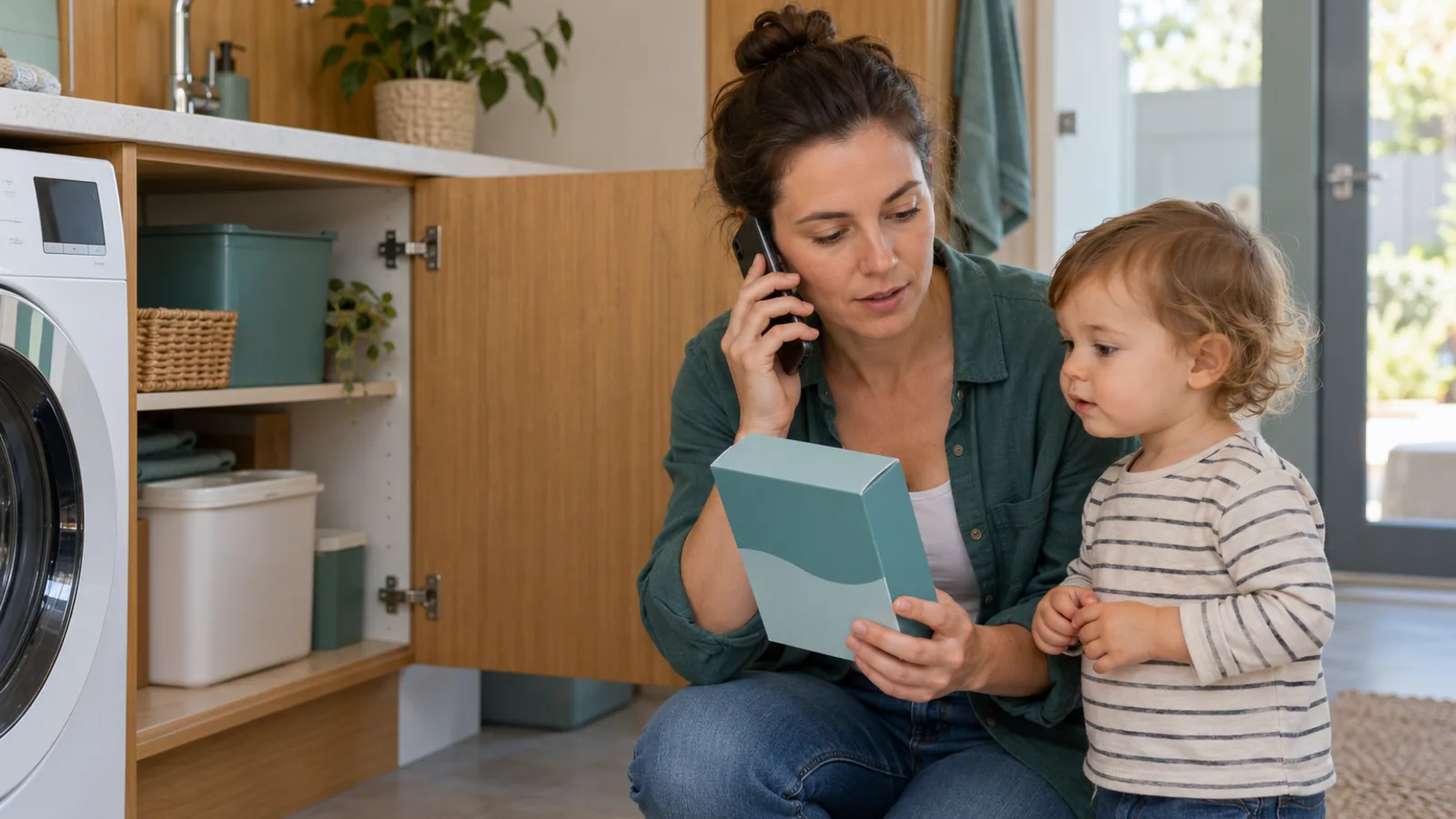
Your toddler is standing in the laundry with the cupboard open and a dishwashing tablet in their hand. Was it in their mouth? Did they swallow any? You can't tell.
Don't wait to find out. Ring 13 11 26. A poisons specialist answers any hour of the day or night and tells you exactly what to do next.
Collapsed, not breathing, having a seizure, or a severe allergic reaction? Call 000 for an ambulance first.
What it is
13 11 26 is the Poisons Information Centre number. In Western Australia your call goes to the WA Poisons Information Centre at Sir Charles Gairdner Hospital in Perth. It runs 24 hours a day, 7 days a week, for people in WA, South Australia and the Northern Territory, and handles more than 45,000 enquiries a year.
The people on the phone are Specialists in Poisons Information. Many are pharmacists with extra training in poisons and toxicology. For serious or complicated cases they have toxicologists from the WA Clinical Toxicology Service behind them. The WA centre is part of a national network, so the advice is the same wherever you are in Australia.
They help with medicines, cleaning and laundry products, garden chemicals, plants, mushrooms, and bites and stings.
Why every parent of a toddler needs it
WA Health says 65 per cent of the people accidentally poisoned are children, and children aged 1 to 3 are most at risk. They move fast, they climb, and everything goes in the mouth. The product most often involved is paracetamol: the one in almost every home.
When to call
Call, even if your child seems perfectly fine, when they have:
- swallowed, sucked or licked something that might be harmful, or you think they might have
- got something on their skin or in their eyes
- breathed in fumes from a chemical
- been given the wrong medicine, or the right medicine twice
- been bitten or stung by a spider, snake, insect or sea creature
Don't wait for symptoms. Some poisons take hours to show, and by then the best time to act has passed.
What happens on the call
The specialist will ask you:
- What happened, and when.
- The name of the product or medicine.
- Your child's name and age, and any medical conditions.
- Any symptoms you can see.
- Where you are.
They look up the product, work out the risk for your child, and tell you what to do. Most accidental poisonings can be watched at home, and they will tell you what to look out for. Sometimes they will send you to a GP or hospital, and if it's needed they can organise an ambulance for you. They may ask for your phone number so they can ring back and check on your child.
Need an interpreter? Ask the specialist for one, or ring TIS National on 131 450 for phone interpreting.
What to do while you dial
From the WA centre's own first aid advice:
- Swallowed: do not make your child vomit. Bring the container or medicine packet to the phone.
- On the skin: take off any clothing with the product on it and rinse the skin with running water.
- In the eyes: rinse with running water from a cup or jug for 10 to 15 minutes. No eye drops.
- Breathed in: get your child into fresh air without putting yourself at risk.
Ten minutes that stop most calls
WA Health's prevention list, in plain terms:
- Go room by room and find every medicine, cleaner and chemical. Handbags and visitors' bags count.
- Put them up high, in a cupboard with a child lock.
- Unpack shopping straight away.
- Keep everything in its own container. Never pour a chemical into a drink bottle.
- Don't take medicine in front of children, and never call medicine "lollies".
- Read the label every time, and don't give medicine in the dark.
- Take old or unwanted medicines back to the pharmacy.
Our posts on medicines and laundry pods and button batteries cover the two biggest dangers in more detail.
Pets too
13 11 26 is for people only. For a dog or cat that has eaten something, call your vet or the Animal Poisons Helpline on 1300 869 738.
Save it now
Put 13 11 26 in your phone as "Poisons", next to healthdirect (1800 022 222). Write it on the fridge and inside the laundry cupboard door, where the babysitter and grandparents will see it.
Sources
- WA Poisons Information Centre, Sir Charles Gairdner Hospital (24-hour service for WA, SA and NT, specialists, WA Clinical Toxicology Service, 45,000 enquiries a year, national network, first aid, when to call 000)
- HealthyWA: Poisoning first aid (65 per cent of victims children, ages 1 to 3 most at risk, paracetamol, call even with no symptoms, bites and stings)
- HealthyWA: Prevent poisoning in the home (prevention list)
- NSW Poisons Information Centre: What happens when you call (questions asked, most cases watched at home, ambulance, follow-up calls, interpreters)
- NSW Poisons Information Centre: About (humans only, Animal Poisons Helpline 1300 869 738)