 Child Safety
Pool fences in WA: the rules, and the four Keep Watch habits
What a WA pool barrier must do, the gate checks that matter most, and Royal Life Saving's four Keep Watch actions for children under 5.
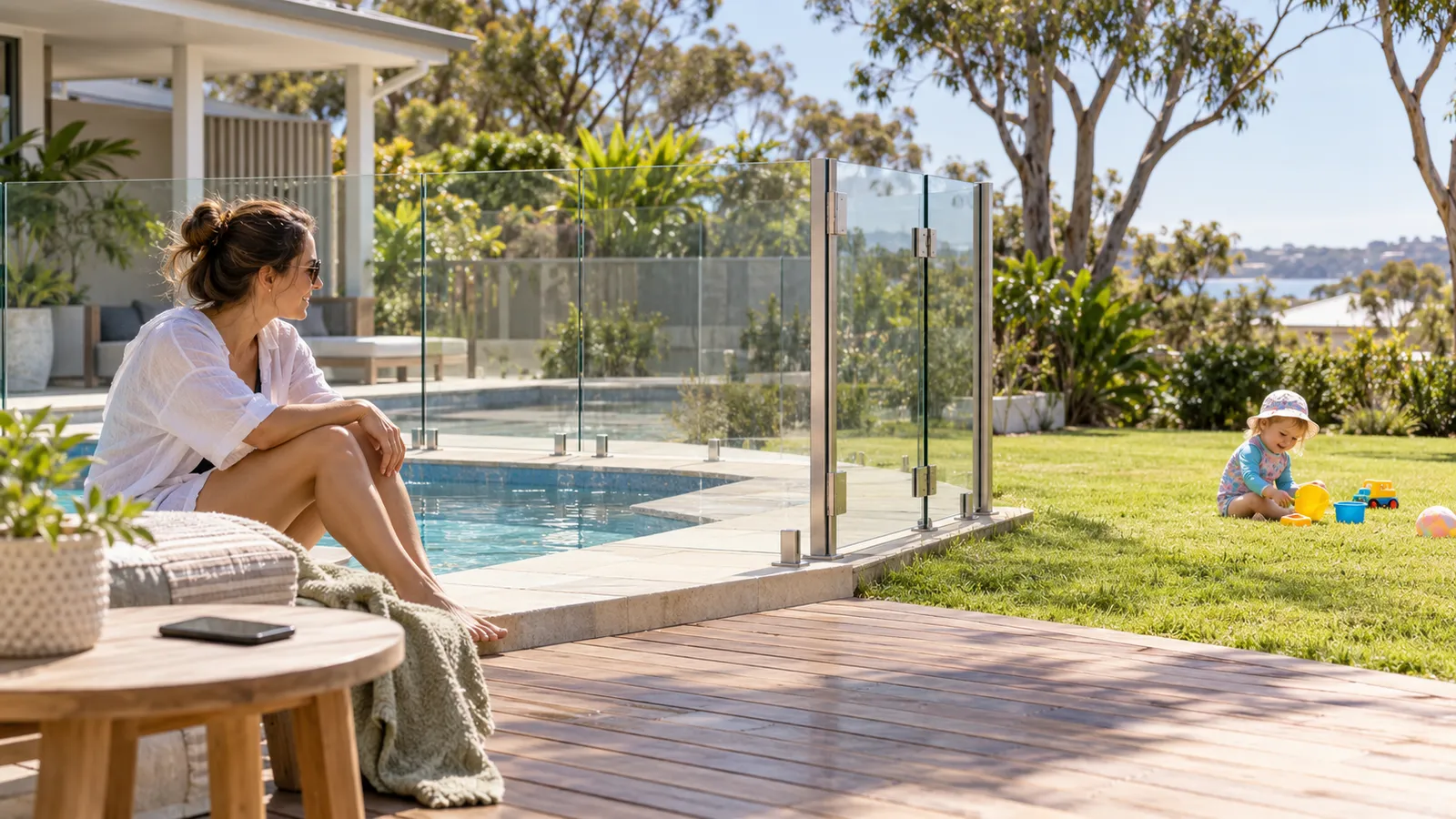
A pool fence works only while the gate shuts behind you, every time. In Western Australia, gates are the most common way in for young children who have drowned in home pools, and the most common fault pool inspectors find. Fifteen children under 5 drowned in Australia in 2024–25, half of them in home pools.
Fences have helped. WA recorded an average of 4.9 young children's drowning deaths a year in pools and spas from 1988 to 1996, and 1.9 a year from July 2012 to June 2022, while both people and pools grew in number.
Child missing? Check the pool, bath and any water first, then look everywhere else.
Does my pool need a fence?
In WA, yes, if it holds more than 30 cm of water. That includes spas, and portable and inflatable pools. The barrier must keep children under 5 out from the street, the neighbours' yards and the house. Your local council inspects it at least every four years.
Check your gate this weekend
- Self-closing. Open the gate fully and let go. It must swing shut on its own from any position, without bouncing back open.
- Self-latching. It must latch by itself when it closes, every time. Wind, a dropped hinge or grass under the gate can stop it.
- Opens outwards. WA gates must swing away from the pool, never inward or sideways.
- Latch out of reach. The release sits on the pool side and high up: at least 1500 mm above the ground in the simplest layout.
- Never propped open. Not for a minute, not for a party.
Check the fence
- At least 1.2 m high on the outside.
- Gaps between bars no wider than 100 mm, and no more than 100 mm under the fence or the gate.
- Nothing to climb. WA's non-climbable zone reaches 900 mm out from the outside of the fence, so keep chairs, pot plants, the barbecue and toys well clear of it.
The four Keep Watch actions
Royal Life Saving's Keep Watch program asks parents of children aged 0 to 4 to use all four together, so one can catch a lapse in another.
- Supervise. Within arm's reach, eyes on, hands on, phone away. Older children shouldn't supervise younger ones around water.
- Restrict. A fence with a self-closing, self-latching gate; bathroom doors shut; lids on nappy buckets; covers on spas and tanks.
- Teach. Water awareness classes from 6 months. A child who can swim can still drown, so nothing replaces supervision.
- Respond. Learn CPR, refresh it regularly, and call Triple Zero (000) in an emergency.