 Child Safety
Smoke alarms and a home fire escape plan: the WA fire service's free guide for families
DFES, WA's fire service, has a free guide to smoke alarms and home fire escape plans. Which alarms to get, where they go, the monthly test, the 10-year rule, renters' rights, and how to make a plan your kids can follow.
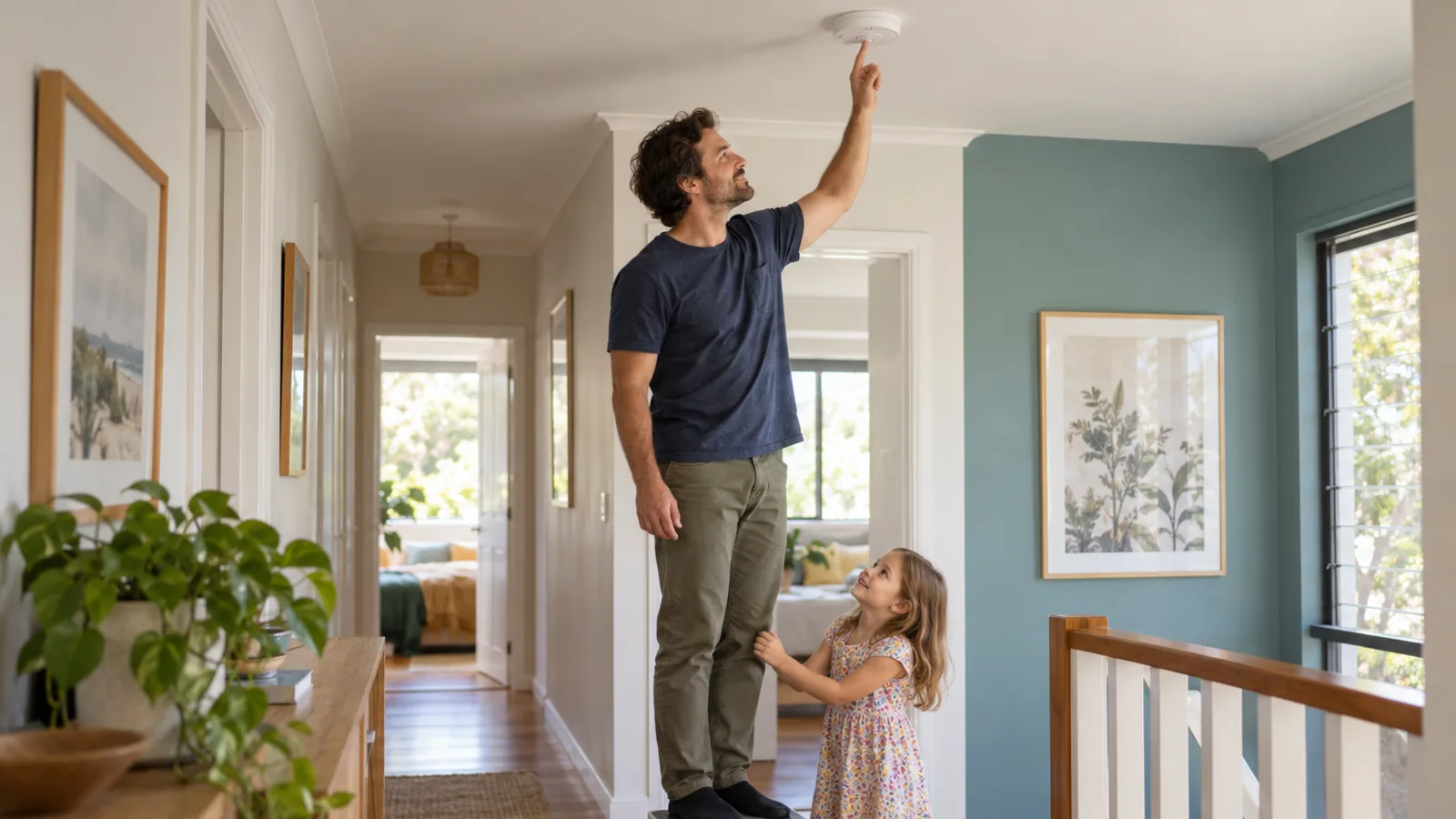
Most house fires that hurt or kill people start at night, while everyone is asleep. That is the WA fire service's own finding. A child asleep down the hall won't smell smoke. A working smoke alarm wakes you, and a plan you've practised gets everyone out.
The Department of Fire and Emergency Services (DFES) has a free guide that covers both. It takes ten minutes to read, and the first job, testing your alarms, takes ten seconds.
Read the DFES smoke alarm guide
What it is
DFES runs the fire and emergency services in Western Australia. Its "Fires in the home" pages tell you which smoke alarms to get, where they go, how to look after them, what the law asks of landlords, and how to make a home fire escape plan. It is free, and there is nothing to sign up for.
Which smoke alarms
DFES recommends photoelectric smoke alarms, powered by the mains. Modern couches and mattresses tend to smoulder first and make thick, toxic smoke before they burst into flame, and photoelectric alarms are better at picking that up.
If wiring isn't possible, DFES says the next best is an alarm with a 10-year lithium battery: no flat-battery chirps, no yearly batteries, no ladders.
It also recommends interconnected alarms: when one goes off, they all go off. If your bedroom is at one end of the house and the fire starts at the other, you hear it straight away.
Mains-powered alarms must be put in, and taken out, by a licensed electrician.
Where they go
DFES says you're safest with an alarm in every bedroom, the living room, the hallway, any stairs, and an attached garage (a heat alarm there if it's dusty). At the very least, there should be one in the hallway nearest the bedrooms.
Keep them out of kitchens and bathrooms, where cooking and steam set them off. False alarms lead people to pull the battery out, and then the alarm protects no one. In the kitchen, a heat alarm does the job.
Looking after them
Once a month: press the test button for up to 10 seconds until it sounds. A broom handle works if you can't reach. Check the light: green on a mains alarm, a red blink every 40 to 60 seconds on a battery one.
Once a year: vacuum the dust and cobwebs off with a soft brush. If it takes a 9-volt battery, change it.
Every 10 years: replace every smoke alarm, whatever the type. They lose their sensitivity with age. Look for the date on the label.
A chirp about once a minute means it needs a battery, a clean, or replacing. Don't ignore it.
If you rent
In WA your landlord must fit mains-powered smoke alarms, keep them working, and replace them before they're 10 years old. Tell your landlord or agent if one isn't working. You only change a 9-volt back-up battery if the alarm is easy to reach; on a high ceiling, that's the landlord's job. Having trouble? Consumer Protection takes calls on 1300 30 40 54.
Your home fire escape plan, step by step
DFES asks every household to have a plan and practise it, because in a real fire you'll be frightened or half-asleep. Make one with your kids tonight:
- Walk through the house together and find every way out, including windows. Aim for two ways out of every room.
- Check that windows, security doors and screens open from the inside. Keep keys nearby, not hidden.
- Pick a meeting place outside, such as the letterbox.
- Decide who carries the baby and who helps the toddler. DFES asks you to plan for anyone very young.
- Write it down and stick it on the fridge.
- Practise it. Teach the kids to get out fast, crawl low under smoke, go to the meeting place, and call 000.
The rule that matters most, for adults too: once you're out, you stay out. Never go back into a burning house, for anything. Wait for the firefighters.
If someone's clothes catch fire: stop, drop, cover and roll.
What it costs
The guide is free. Alarms cost money; DFES says WA Seniors Card holders may get a Safety and Security Rebate on mains-powered smoke alarms, fire blankets and extinguishers.
Read the DFES smoke alarm guide