 Child Safety
Safe toys and gifts: Kidsafe WA's free checklist before you buy, wrap or play
Toys send around 300 WA children to Perth Children's Hospital emergency every year, most of them under five. Kidsafe WA's free Safe Gift Giving Checklist takes two minutes: age, small parts, button batteries, magnets, cords, recalls and the helmet that goes with the bike.
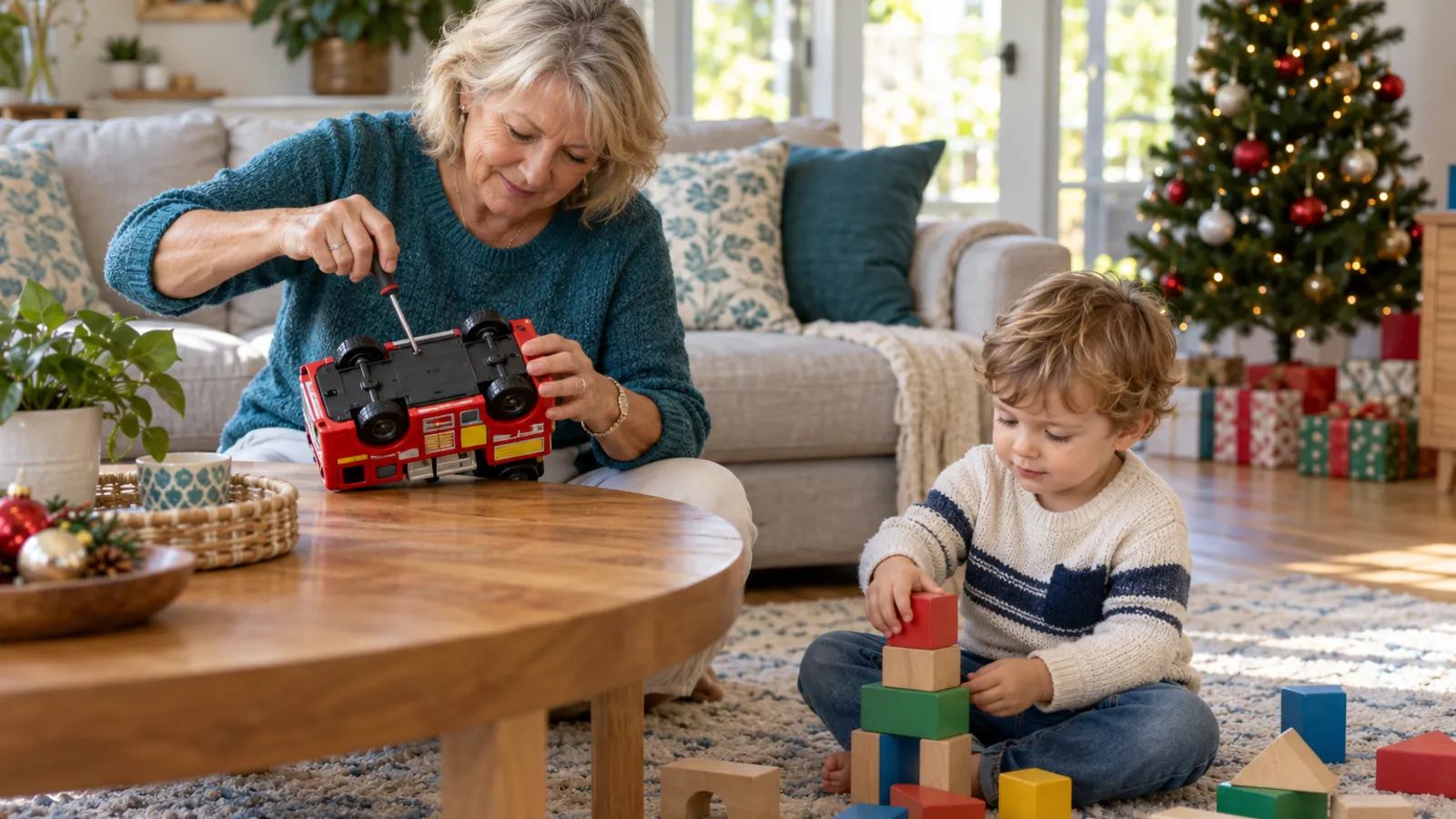
Christmas is coming, and so are the presents: from us, from grandparents, from the neighbours, from the kids' cousins who are six and have very different ideas about what a toddler should play with.
Most toys are fine. Some aren't. Between July 2019 and June 2024, 1,493 children went to Perth Children's Hospital emergency with an injury from a toy or play equipment. That's about 299 a year. Six in ten were under five, and more than half of those hurt (where the place was known) were hurt at home.
Kidsafe WA, the state's child injury prevention charity, has a free one-page Safe Gift Giving Checklist for exactly this time of year. It takes two minutes, and it works just as well for the toys already in the toy box.
Get Kidsafe WA's Safe Gift Giving Checklist
What it is
Kidsafe WA's holiday campaign is called The Thought that Counts. The page has two free downloads for parents:
- Safe Gift Giving Checklist (one page, October 2026): yes-or-no questions to ask before you buy a gift, and three more before you wrap it.
- Toy Safety fact sheet and checklist (four pages, June 2026): how to choose toys, how to store them, and longer checklists for button batteries, toy boxes, portable pools, trampolines and e-rideables.
No sign-up. Print one for the fridge and send the link to the grandparents.
Who it's for
Anyone buying for a child: parents, grandparents, aunties, friends, Kris Kringle at work. The checks matter most for babies and toddlers, who put everything in their mouths, and for homes where little ones share a floor with older brothers' and sisters' toys.
What the checklist asks
Before you buy:
- Is it right for their age and stage? Read the age on the box. "Not suitable for children under 3" usually means small parts.
- Could it be a choking hazard? No small parts for young children.
- Button batteries, loose magnets or water beads? All three can do serious harm if swallowed. If they're in the house, keep them up high and out of reach.
- Safety label and instructions? Read the warnings and follow them.
- Well made, in good condition? No broken bits, sharp edges, or pieces that could work loose.
- Cords, strings or ribbons longer than 22 cm? Long cords can strangle a young child.
- Has it been recalled? Search the ACCC's Product Safety site before you pay. Our post on product recalls shows how, and how to get an email when something you own is recalled.
- Does it need safety gear? A bike, scooter or skateboard comes with a properly fitted helmet, and knee and elbow pads.
Before you wrap:
- Take off the extra packaging, ties and plastic bags, and put them where little hands can't reach.
- Read the instructions so you can set it up safely.
- Put batteries, chargers and small accessories somewhere secure.
The bits worth knowing
Button batteries. Remotes, singing cards, flashing toys, light-up shoes. Kidsafe WA's toy checklist asks: is the battery compartment screwed shut and tight, and are new and used batteries kept out of sight and reach? Save the Poisons Information Centre in your phone: 13 11 26. More in our posts on button batteries and the Poisons Information Centre.
Magnets. Small high-powered magnets are permanently banned in Australia, because if a child swallows more than one they can stick together through the gut. Magnets on figurines, letters and numbers should be firmly attached and not able to come off.
Toy boxes. Kidsafe WA says choose one with no lid, or a light, removable lid with no lock. If it has a lid, stoppers inside should leave a gap of at least 1.5 cm when it's closed, and it should have air holes.
Keep big kids' toys apart. Older children's toys often have small parts. Keep them separate from the baby's.
Check again later. Toys wear out. Look them over now and then, and take faulty ones back to the shop.
The ACCC also has short guides for single kinds of toy: magnets, water beads, toy boxes, squishy toys, push-and-pull toys with cords, and toys that shoot things. For cots, prams and high chairs, see our post on keeping baby safe.
What it costs
Nothing. Both downloads are free.
How to use it, step by step
- Open Kidsafe WA's page (button below) and press Download under the checklist.
- Print it, or save it on your phone for the shops.
- Before you buy, go down the list. Any "no"? Pick something else.
- Before you wrap, do the three wrapping checks.
- Send the link to the grandparents and anyone else buying for your little one. A friendly "we're avoiding button batteries and magnets this year" saves an awkward moment on Christmas morning.
- On the day, clear the wrapping away and check battery covers before the toys go on the floor.
Get Kidsafe WA's Safe Gift Giving Checklist
Sources
- Kidsafe WA: The Thought that Counts (safe gift giving campaign page)
- Kidsafe WA: Safe Gift Giving Checklist (October 2026, PDF)
- Kidsafe WA: Toy Safety fact sheet and checklist (June 2026)
- Kidsafe WA: Childhood Injury Bulletin, Injuries from Toys and Play Equipment (January 2026, Perth Children's Hospital ED data July 2019 to June 2024, PDF)
- ACCC Product Safety Australia: How to buy and play with toys safely (product guides and bans)
- ACCC Product Safety Australia: Small high-powered magnets ban