 Child Safety
A Parent's Guide to Baby's First Year: Kidsafe WA's free 28-page safety guide
Kidsafe WA's free guide walks you through every common injury in your baby's first 12 months, from falls and scalds to choking, blind cords and hot cars, with first aid steps on the same page. Here's what's in it and how to get it.
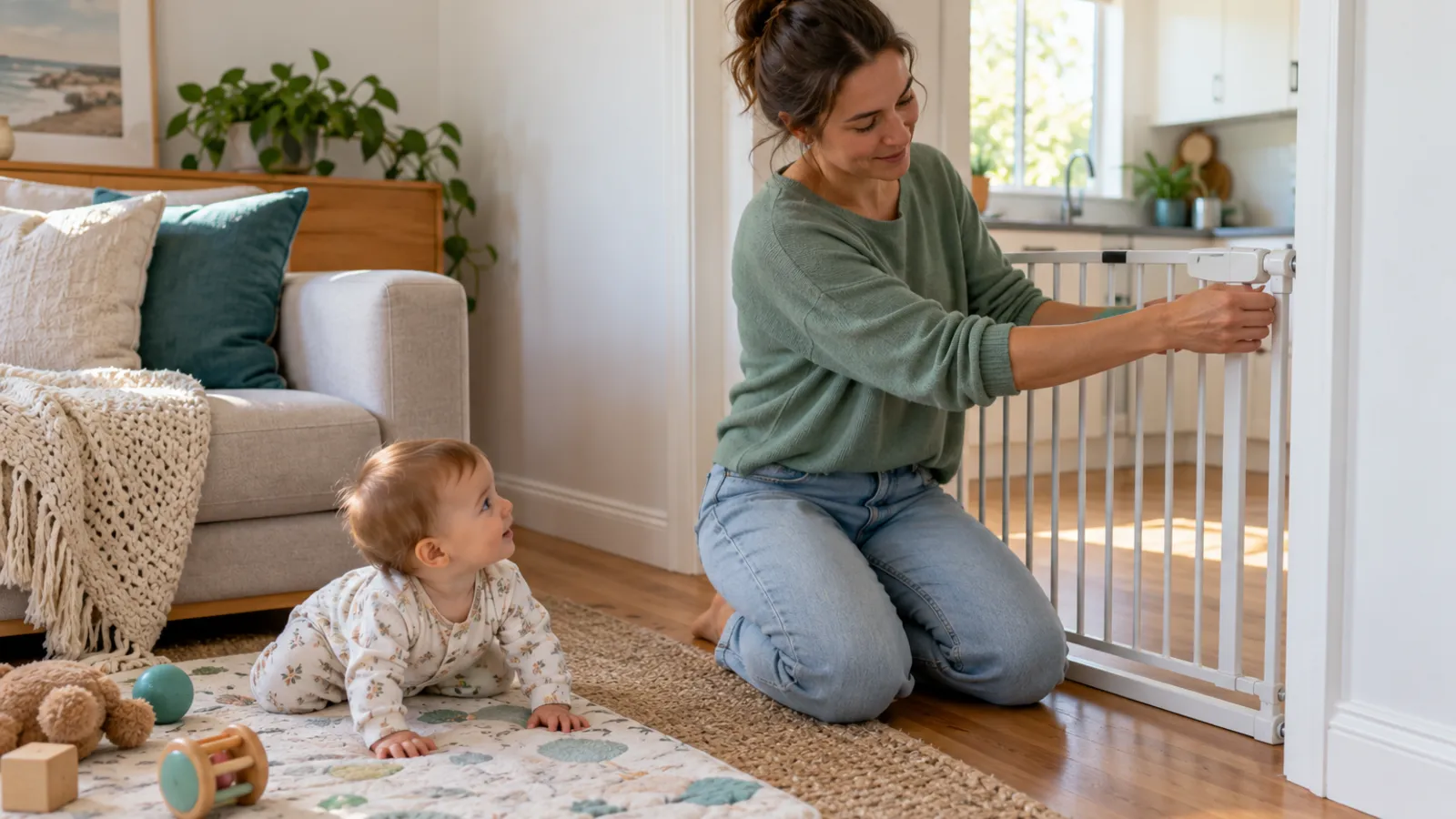
The first year moves fast. One week your baby only wriggles. A few weeks later they roll off the bed you were sure they couldn't roll off. Then they crawl, pull themselves up on the bookcase, and put everything in their mouth.
Most injuries to babies under 12 months happen at home. Kidsafe WA has put everything you need to know about that year into one free booklet: A Parent's Guide to Baby's First Year. It's 28 pages, the second edition came out in 2025, and you can download it straight away.
Download the guide from Kidsafe WA
What it is
A plain, picture-led booklet from Kidsafe WA, the child accident prevention charity based in Perth. Each page takes one kind of injury, explains why babies are at risk, and lists the steps that prevent it. Where it matters, a "Top Tip" box gives you the first aid on the same page.
It starts with three steps you can use for any hazard:
- Spot the hazard. Get down on your hands and knees and look at the room from your baby's height.
- Decide how to deal with it. Remove it, guard against it, or keep your baby within arm's reach.
- Make the change straight away. Injuries happen when we least expect them.
Who it's for
Expecting parents and anyone with a baby under one. It's just as useful for grandparents, carers and anyone your baby will spend time with. It covers both stages of the first year: birth to six months (wriggling, rolling, mouthing) and six months to one (crawling, grabbing, pulling up, copying you).
What's inside
- Falls. Never leave a baby on a change table, bed or couch, even if they've never rolled. Keep one hand on them while changing. Use the harness in high chairs and prams. Skip baby walkers. Gates on stairs.
- Poisoning. Medicines and cleaning products in a locked cupboard, ideally 1.5 metres up. Child-resistant is not childproof. Visitors' handbags go up high too.
- Burns and scalds. Never hold your baby with a hot drink in your hand. Bath water no hotter than 38°C. Cold water in first and last. Hot water at the bathroom tap set to 50°C at most.
- Choking. Anything smaller than a 20-cent coin is a choking hazard. No popcorn, nuts, whole grapes or hard lollies. Grate or soften raw carrot and apple.
- Suffocation. Knot plastic bags before storing them. Take the plastic off new mattresses. No pillows or bumpers in the cot. In a sling or carrier, you should always see your baby's face, chin up off their chest.
- Strangulation. Blind and curtain cords at least 1600mm off the floor. No amber necklaces at sleep time. Dummy chains no longer than 22cm.
- Button batteries. A swallowed battery can burn through a baby's throat in under two hours. Check every remote, toy and greeting card for a secure battery cover.
- Electrical safety. Covers on spare power points, safety switches, appliances unplugged and put away.
- Water. Stay within arm's reach. Never leave your baby in the bath, and never let an older child supervise. Empty buckets and pet bowls. Pools holding more than 30cm of water need a barrier.
- Furniture tip-overs. Anchor drawers, bookcases and TVs. Don't put toys on top of furniture.
- Safe sleeping. On their back, face uncovered, in their own cot in your room for the first six to 12 months.
- Toy safety. Follow the age label. Keep big kids' toys with small parts away from the baby.
- Hot cars. A parked car can get more than 30°C hotter than outside, mostly in the first five minutes. Never leave your baby in the car, even for a quick errand. Put your phone or bag on the back seat so you always look.
- Car seats. Rear facing from birth, the rules for each age up to seven, and how to check a second-hand seat (under 10 years old, never in a crash).
The first aid boxes cover poisoning, burns, choking (five back blows, then five chest thrusts) and button batteries. If your baby stops breathing or goes limp, call 000.
What it costs
Nothing. It's a free PDF download. No sign-up, no email address.
How to get it
- Open Kidsafe WA's download page (button below).
- Tap "Download". The PDF opens in your browser.
- Save it to your phone or print it. It's handy on the fridge, and good to send to grandparents.
- Do a hands-and-knees walk through each room with the guide open, and fix one thing today.
- Book a first aid course. The guide recommends it. Try St John WA Tiny Tots or the free Heart Beat Club online.
Get A Parent's Guide to Baby's First Year
More help
- Want to see it all set up in a real house? The Kidsafe WA Safety Demonstration House shows these safety products fitted in real rooms.
- Poison worry? Call the Poisons Information Centre on 13 11 26, any time.
- Kidsafe WA: (08) 6244 4880.
Sources
- Kidsafe WA: A Parent's Guide to Baby's First Year, download page, checked 29 Oct 2026
- Kidsafe WA: A Parent's Guide to Baby's First Year, second edition 2025 (PDF, 28 pages): three key steps, development stages, falls, poisoning, burns and scalds, choking, suffocation, strangulation, button batteries, electrical, water, tip-overs, safe sleeping, toys, hot cars, child car restraints, Kidsafe contacts, read 29 Oct 2026