 Child Safety
Burns and scalds at home: Kidsafe WA's free checklist and the five first aid steps
A cup of tea, the bath tap, the heater. Kidsafe WA's free fact sheet and Home Burns Safety Checklist show you where burns happen, how hot is too hot, and what to do in the first 20 minutes.
Almost 500 children a year are treated for a burn or scald at the Perth Children's Hospital Emergency Department. More than half of the children admitted are under five. They can reach the kettle cord and the bath tap now, but they can't yet tell hot from safe.
Kidsafe WA has two free downloads that cover the lot: a four-page Burns and Scalds fact sheet, and a two-page Home Burns Safety Checklist you can walk around the house with, ticking yes or no. Its burns page also shows the five first aid steps as big coloured pictures, worth a look before you ever need them.
Get Kidsafe WA's burns checklist and first aid steps
What it is
- Burns and Scalds fact sheet. Where burns happen (hot drinks, bath water, heaters, appliances, house fires), why young children are most at risk, and what to change.
- Home Burns Safety Checklist. More than 30 yes-or-no questions room by room: bathroom, kitchen, heaters, bedrooms, car, backyard. Every "no" is a job to do.
- First aid for burns and scalds: Prevent, Remove, Cool, Cover, Seek. On the page, on the checklist, and in the fact sheet.
- Short videos from Kidsafe on burns safety.
All of it is free, and nothing asks you to sign up.
Who it's for
Any family with babies, toddlers or preschoolers, and anyone who minds them: grandparents, babysitters, family day care. Kidsafe runs National Burns Awareness Month every June because burns go up in winter, when heaters, hot water bottles and wheat bags come out. So it's a good list to pull out again each May.
The two things most people don't know
Hot tap water burns fast. Kidsafe WA's fact sheet says water at 50°C takes 5 minutes to cause a full thickness burn. At 60°C it takes less than a second. The bathroom is the most common place for hot tap water scalds.
- WA law says hot water to baths, basins and showers must be controlled to no more than 50°C. If your home's isn't, a licensed plumber can fit a tempering valve.
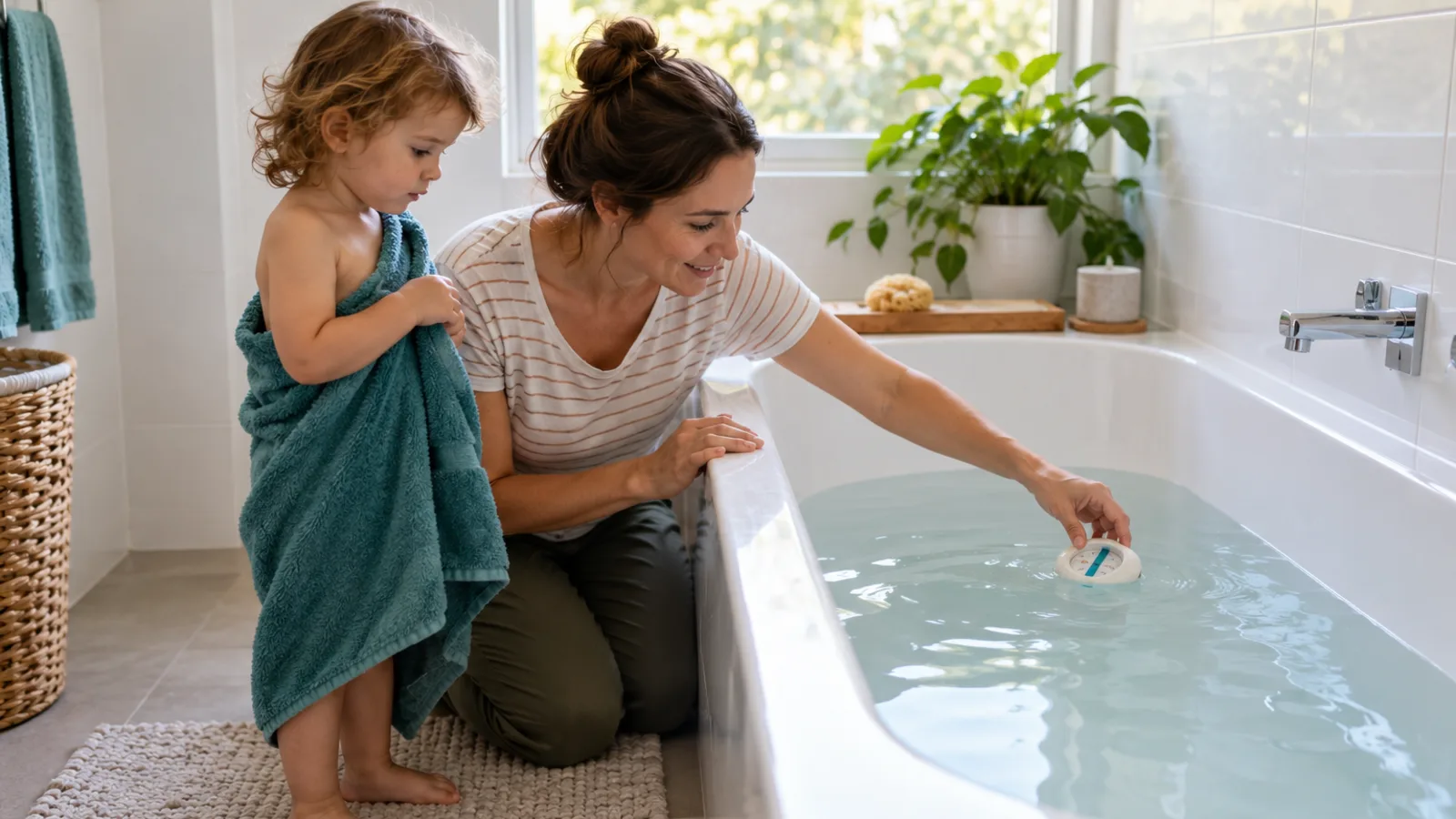
- The most a child's bath should be is 38°C. Test it every time, with your elbow or a bath thermometer.
- Run the cold tap first and last, and never leave a running bath.
Cups of tea burn toddlers. Scalds from hot drinks happen when a child pulls a cup down, runs into someone holding one, or is held by them. Put your child down before you drink, and use a cup with a lid. Our post on hot drinks has five habits for this.
The rest of the checklist, in short
- Guards around heaters, fireplaces and the stove. Back hot plates first, pot handles turned in.
- Kettle and appliance cords short and out of reach.
- Microwave out of reach of children, at a safe height for adults.
- Hot water bottles and wheat bags out of the bed before children get in, and hot water bottles replaced every year.
- Children's nightwear labelled low fire danger.
- Matches, lighters, vapes and hair straighteners locked away.
- Button batteries stored out of reach (see our button batteries post).
- Working smoke alarms and a home fire escape plan you practise (see smoke alarms).
- A first aid kit at home and in the car, in date.
- Let the hose run cool before children play under it.
First aid: Prevent, Remove, Cool, Cover, Seek
- Prevent. Keep yourself and others from getting burnt too.
- Remove. Get away from the heat. Take off clothing, nappies and jewellery near the burn, unless stuck to the skin.
- Cool. Hold the burn under cool running water for 20 minutes. Keep the rest of your child warm.
- Cover. A clean, light, non-stick dressing. Kidsafe WA says plastic cling film works well. Nothing fluffy.
- Seek. See a doctor if the burn is on the face, hands, feet, lap, genitals or bottom, is bigger than a 20 cent coin, or has blistered. In an emergency, call 000.
Never use ice, butter, oils, ointments or creams. Don't put a burnt child in a bath of cold water. Don't pop blisters.
How to use it, step by step
- Open Kidsafe WA's burns page (button below).
- Download the Home Burns Safety Checklist under Resources. Print it or keep it on your phone.
- Walk the house with it: bathroom first, then kitchen, lounge, bedrooms, car, backyard.
- Check your hot water. If you don't know whether it's tempered to 50°C, ask a licensed plumber.
- Pick the first fix from your "no" answers. For most families with a toddler, it's the bath water or the kettle cord.
- Learn the five first aid steps with whoever else minds your child, and stick them on the fridge.
- Download the fact sheet too if you want the reasons behind each tip.
Get Kidsafe WA's burns checklist and first aid steps
Sources
- Kidsafe WA: National Burns Awareness Month (first aid for burns and scalds: Prevent, Remove, Cool, Cover, Seek; Home Burns Safety Checklist; videos)
- Kidsafe WA: Burns and Scalds fact sheet (almost 500 children a year at PCH Emergency; over half admitted under five; 50°C in 5 minutes, 60°C under a second; bath 38°C; WA hot water law 50°C; first aid)
- Kidsafe Australia: National Burns Awareness Month (June, with ANZBA)