 Child Safety
Which car seat is safest? Check the crash-test star ratings first
Every car seat sold in Australia passes the same minimum standard, but some protect far better in a crash. Child Car Seats publishes free, independent crash-test star ratings for over 200 seats. How to read them and use them before you buy.
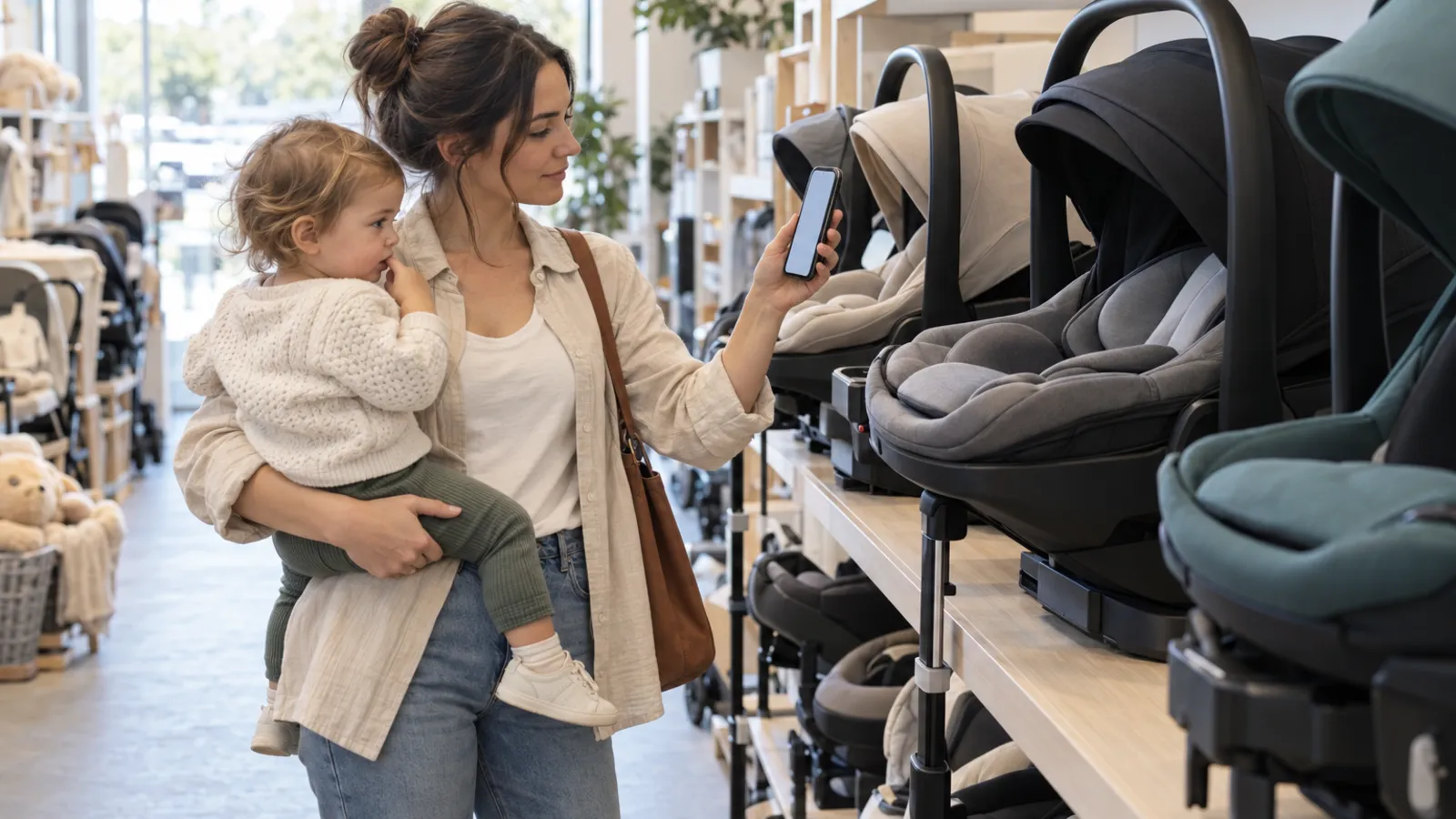
Walk into a baby shop and every car seat on the shelf looks safe. They all carry the Australian Standard sticker. The prices run from cheap to eye-watering, and the box tells you nothing about how the seat did when it was actually crashed.
That is the gap Child Car Seats fills. It crash-tests seats sold in Australia, scores them with stars, and puts every result online for free. Ten minutes on it before you shop can mean a seat that protects your child better, for the same money.
What it is
Child Car Seats is the public face of the Child Restraint Evaluation Program, called CREP. CREP is run by Transport for NSW, Victoria's Transport Accident Commission, Victoria's Department of Transport and Planning, and Kidsafe Australia. It sells nothing; it is there to give parents independent information.
Every seat on the site already meets the Australian Standard, AS/NZS 1754. That standard is a floor, not a ranking. CREP's job is to show how far above the floor each seat goes, and to push manufacturers to sell only seats that do well.
How the seats are tested
Each seat goes through three crash tests on a sled:
- A head-on crash at 56 km/h with the largest test dummy the seat is made for.
- The same head-on crash with the smallest dummy.
- A side crash, where a door is driven into the side of the seat, with the largest dummy.
The testers measure whether the seat holds the child's head and body, how much the head is thrown forward and up, how much force reaches the head and chest, and whether the seat stays in one piece with the buckle still working.
Reading the stars
Each seat gets two sets of stars.
Protection stars show how well the seat protected the dummy in the crash tests. More coloured stars, better protection.
Ease-of-use stars show how easy the seat is to use correctly: the packaging, the instructions, the labels, buckling your child in, and fitting the seat into the car. This matters because a seat fitted wrong protects less, and an easy seat is more likely to be fitted right every time.
The stars are colour coded by the way the seat faces: purple for rear facing, dark green for forward facing, gold for boosters. A seat that converts from one mode to another gets a separate score for each.
One catch: the tests changed in 2021. Seats rated from 2021 on cannot be compared with seats rated under the older method, so compare like with like.
How to use it, step by step
- Open Find and compare child car seats.
- Pick your child's age range: 0 to 6 months, 0 to 12 months, 1 to 4 years, or 4 years and up.
- Pick the type of seat: rear facing, forward facing or booster. You can also search by brand or model if you already have one in mind.
- Look at the results. Seats are ranked by protection first, then ease of use.
- Tick two or three seats to compare them side by side.
- Check each seat's measurements in the results against the back seat of your car, especially if you need to fit two or three seats in one row.
- Write down the model names and take them to the shop.
Before you use a second-hand seat
Child Car Seats says not to use any seat that is more than 10 years old, has been in a crash, or has cracks, damage or frayed straps. Before you take a hand-me-down, check that it is marked AS/NZS 1754 version 2013 or later, has all its parts, has buckles that work smoothly, and still has its instruction booklet. If it fails any of those, don't use it.
Then get it fitted
A five-star seat fitted loosely is not a five-star seat. Once you have chosen, have it fitted or checked by a trained fitter. Our post on finding a car seat fitter in WA shows where to go, and if you only need a seat for a while, Kidsafe WA hires seats with fitting included.
Sources
- Child Car Seats: Find and compare child car seats (age ranges, seat types, ratings key, 2021 method change, compare tool)
- Child Car Seats: Who we are (CREP and its partners, AS/NZS 1754 as the minimum)
- Child Car Seats: Testing explained (frontal tests at 56 km/h, side impact test, ease-of-use categories)
- Child Car Seats: Ratings explained (protection and ease-of-use stars, ranking order)
- Child Car Seats: Is your child car seat still safe? (10 years, crash, damage, second-hand checklist)
- Child Car Seats: FAQs (seat dimensions in the results)