 Child Safety
Driveways and parked cars: Kidsafe WA's free fact sheet in three words
About one toddler a week is run over in an Australian driveway, usually by someone they know, in a car moving slowly. Kidsafe WA's free fact sheet boils it down to Supervise, Separate, See. Here's how to set up your home.
In Australia, about one child a week, most often a toddler, is run over in a driveway. The car is usually moving slowly. The driver is usually someone who loves them: a parent, a grandparent, a friend dropping by.
It happens in the few seconds between "bye, see you tonight" and the car rolling back. A toddler who was standing on the verandah wants to see what's going on, and toddlers are fast. From the driver's seat, a small child right behind the car can be almost impossible to see. Parking sensors and reversing cameras help, but Kidsafe WA is plain about it: you may still not notice a small child until it's too late to stop.
Kidsafe WA has a free one-page Driveway Safety fact sheet, updated June 2026, and a driveway room in its Online Safety Demonstration House where you can click around a real Perth home and see what to change.
Read Kidsafe WA's driveway safety page
What it is
- Driveway Safety fact sheet. One page: why toddlers are at risk, and the three safety steps. Free to download, no sign-up.
- Online Safety Demonstration House: Driveway. A photo of a real WA home with markers you click for driveway, balcony and front-gate safety.
- Hot cars advice on Kidsafe WA's road safety page, for the other danger a parked car holds.
Everything here is free.
Who it's for
Every family with a baby, toddler or preschooler and a car. Also grandparents, visitors, and anyone who parks in your driveway, because the driver is so often not the child's parent.
The three steps: Supervise, Separate, See
Kidsafe WA's rule of thumb is "Don't go if you don't know." If you can't see where every child is, the car doesn't move.
Supervise
- Watch children whenever they're near cars and driveways.
- Hold their hand near cars. Carry them if that's easier.
- Home alone and need to move the car, even a few metres? Buckle your child into the car with you first, then move it.
Separate
- Give children somewhere to play that's away from cars. The driveway is not a play area.
- Make the driveway hard to reach from the house: security doors, fences and gates.
- Garden gates should close and latch on their own, with a child-resistant latch out of reach. Kidsafe WA also suggests the garage shouldn't open the backyard straight onto the front yard.
See
- Walk all the way around the car before you get in. Every time, even with sensors and a camera.
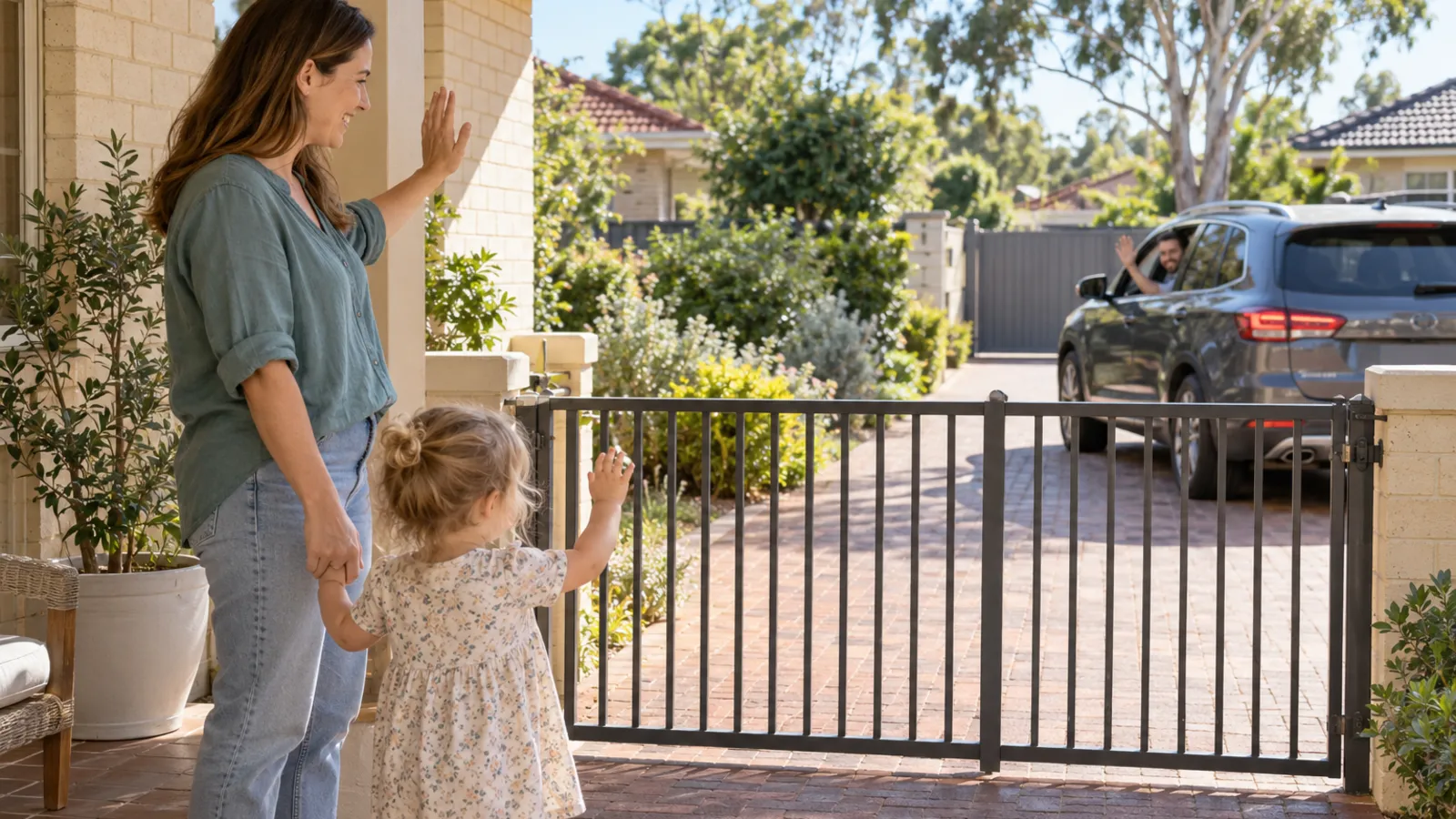
- Wave goodbye from somewhere safe, like behind a closed gate. Not from the driveway.
Children copy what they see. If they watch you walk around the car every time, they learn the driveway is a place to be careful.
Hot cars: never leave a child in one
A parked car can get more than 30 degrees hotter than outside, even on a cool day. Kidsafe WA says three-quarters of that rise can happen in the first five minutes. About 5,000 Australian children are rescued from cars every year, and three-quarters of them are under four.
- Never leave a child alone in the car, even for a quick errand.
- Get petrol when your child isn't with you, or use pay-at-pump.
- Don't let children play with the keys or in the car. They can lock themselves in.
If a child is ever locked in a car, call 000. The full habits are in our post on hot cars.
What it costs
Nothing. The fact sheet, the online house and the hot cars advice are all free. If you'd like to see these fixes in a real house, Kidsafe WA's Safety Demonstration House in West Leederville is open on weekdays.
How to use it, step by step
- Open Kidsafe WA's driveway page (button below) and click each orange marker.
- Download the Driveway Safety fact sheet from Kidsafe WA's resources page. Stick it on the fridge.
- Walk your property with your child's eyes. Can they get from the house or backyard to the driveway on their own? Through the front door, the garage, a side gate?
- Close the gap. A self-closing, self-latching gate, a security door, or a fence between the play area and the driveway.
- Agree a goodbye spot with your family, somewhere off the driveway.
- Tell everyone who drives in. Grandparents, friends, tradies. One line: "Walk around the car before you reverse, the little one might be out."
- Make the walk-around a habit every time you get in the car.
Read Kidsafe WA's driveway safety page
Sources
- Kidsafe WA: Online Safety Demonstration House, Driveway (car safety, restricting access, self-closing gates, balcony and window safety)
- Kidsafe WA: Driveway Safety fact sheet, updated June 2026 (about one child a week; driver usually known; blind spots; sensors and cameras; Supervise, Separate, See; wave goodbye from a safe place)
- Kidsafe WA: Road Safety, Hot Cars Campaign (about 5,000 children rescued a year, three-quarters under four; over 30 degrees hotter; 75% of the rise in the first five minutes; recommendations)